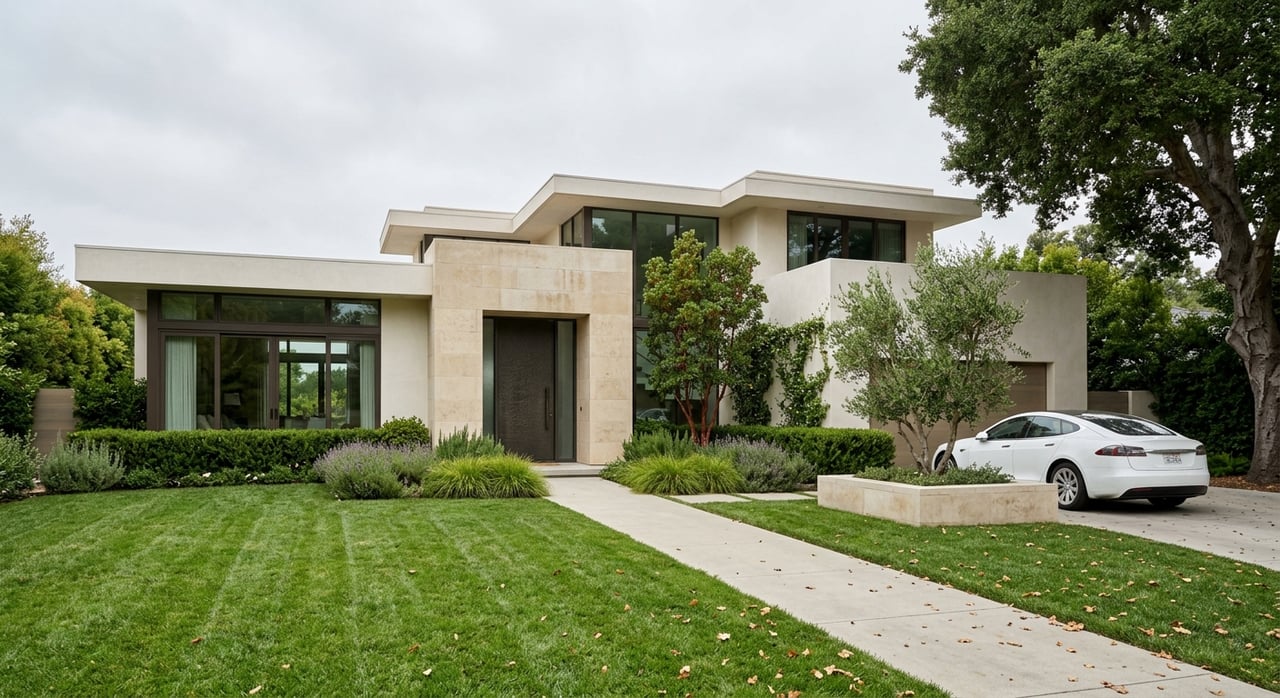
If you have been watching Menlo Park real estate, you may have noticed a clear pattern: older homes are not just being updated, they are increasingly being rebuilt, expanded, or rethought from the ground up. For buyers, sellers, and property owners, that shift can create both opportunity and complexity. Understanding what is driving new construction and rebuild trends in Menlo Park can help you make smarter decisions about pricing, timing, due diligence, and long-term value. Let’s dive in.
Why rebuild activity is rising
Menlo Park has seen a notable increase in housing activity. According to the city’s 2024 Housing Element Annual Progress Report, permitted units rose from 70 in 2023 to 176 in 2024.
That jump matters because it shows stronger development momentum across several housing types. In 2024, the city reported 57 single-family detached units, 57 ADUs, and 62 units in buildings with five or more units, along with 68 completed units. For anyone tracking the local market, that is a meaningful sign that construction and redevelopment activity is moving forward.
The policy backdrop also helps explain the shift. Menlo Park announced that its 2023-2031 Housing Element was certified by the state, and the city has said that the plan is intended to streamline regulations and increase allowable residential densities.
In practical terms, this means property owners and buyers are operating in a market where adding units, replacing older housing stock, or pursuing major remodels is becoming more common. That does not make every lot easy to develop, but it does create a more active environment for redevelopment decisions.
Where activity shows up most
Most of the rebuild pressure is centered in Menlo Park’s existing single-family areas. The city’s SB 9 guidance applies to single-family zones including R-E-S, R-E, R-1-S, R-1-S (FG), R-1-U, and R-1-U (LM), which places much of the conversation squarely inside established residential neighborhoods rather than commercial districts.
The city’s permit records also suggest that activity is spread across multiple residential streets, not limited to one corridor. The 2024 annual report includes addresses on Hobart Street, Princeton Road, Bay Laurel Drive, Santa Cruz Avenue, Hermosa Way, Beacon Street, Menalto Avenue, College Avenue, Laurel Street, Middle Avenue, and Oak Court.
That broad distribution matters if you are buying or selling in Menlo Park. Instead of thinking about redevelopment as a niche trend in one pocket of town, it is more accurate to see it as a pattern that can affect many established residential blocks.
What counts as a rebuild or major remodel
Not every project starts with a full teardown. In Menlo Park, substantial additions and remodels can sometimes be treated much like new construction from a review standpoint.
A recent city Planning Commission public hearing notice described a case at 919 Arnold Way where a remodel and addition that exceeded 50% of replacement value and 50% of existing floor area was treated as equivalent to a new structure. That is important because the line between a remodel and a rebuild is not always as simple as it sounds.
The city code also notes that nonconforming structures may trigger use-permit review if proposed work exceeds replacement-cost thresholds. In single-family districts such as R-E, R-E-S, R-1-S, R-1-S (FG), and R-1-U, those thresholds are 75% for single-story projects and 50% for two-story projects, as described in the city code on architectural control and permit review.
Menlo Park zoning basics to know
Before you evaluate a lot for new construction, it helps to understand the zoning framework. Menlo Park’s single-family districts each come with specific requirements for lot size, setbacks, height, and floor area.
R-1-U standards
In the R-1-U district, lots must be at least 7,000 square feet, 65 feet wide, and 100 feet deep. The district requires 20-foot front and rear setbacks, side setbacks equal to 10% of lot width with a minimum of 5 feet and a maximum of 10 feet, and a height cap of 28 feet on lots under 20,000 square feet or 30 feet on larger lots, according to the city code for R-1-U.
The floor-area limit also matters. The formula starts at 2,800 square feet plus 25% of lot area above 7,000 square feet, which can shape whether a proposed home pencils out the way you expect.
R-1-S standards
The R-1-S district requires a minimum lot area of 10,000 square feet, 80 feet of width, and 100 feet of depth. It also requires 20-foot front and rear setbacks, 10-foot side setbacks, and follows the same general floor-area and height framework as R-1-U, based on the R-1-S district standards.
For buyers comparing properties, this larger-lot framework can create a different design envelope than what you find in R-1-U. A home that seems similar on paper may offer a very different rebuild path depending on its zoning.
R-E standards
The R-E district is larger still. It requires at least 20,000 square feet of lot area, 110 feet of width, and 130 feet of depth, plus 20-foot front and rear setbacks and 30 feet of total side setback with at least 10 feet on one side, according to the R-E district code.
For two-story development, the district also limits building coverage to 30%. If you are evaluating an estate-style parcel, these rules can have a major effect on design flexibility and total livable area.
How SB 9 fits into the picture
SB 9 is part of Menlo Park’s housing conversation, but it is not the whole story. The city’s 2024 report shows 2 SB 9 duplex projects and 2 SB 9 urban lot split projects, which means the law is being used, just not at the same scale as the broader redevelopment market.
Menlo Park has adopted objective SB 9 standards covering setbacks, stepbacks, floor area, building coverage, maximum unit size, daylight plane, and off-street parking. The city also states that SB 9’s streamlined process does not apply to the demolition and reconstruction of single-family dwellings.
There are also practical limits. Under the city code for urban lot splits and SB 9 development, each resulting lot must generally be at least 1,200 square feet and at least 40% of the original lot size, one unit must be owner-occupied for three years, rentals must be 30 days or longer, and ADUs or JADUs are not allowed on split parcels.
For property owners, SB 9 can be a useful option in the right scenario. Still, it is best viewed as one pathway among several, not a universal shortcut.
What owners need for plan review
If you are considering a new home or major rebuild, the city expects a detailed application package. Menlo Park’s plan submittal guidance calls for a full plan set, site plan, floor-area and building-coverage diagrams, elevations showing the daylight plane, and boundary or topographic survey information when required.
Depending on the property, the application may also need to address trees, drainage, utilities, structural details, and reports such as arborist or soils studies. The city recommends review with Building, Planning, and Engineering staff before formal submittal, which can help reduce delays later in the process.
There is also a neighborhood notice requirement. Under the city code, applicants must provide written notice to contiguous neighbors within 15 days of filing for demolition or building permits for a single-family residence in a single-family zoning district, except for limited repair-only, re-roofing, or interior-alteration work.
Why due diligence matters more than ever
In a high-value market, small mistakes can become expensive quickly. The strongest rebuild candidates are often the ones that align well with current zoning standards and create fewer design or approval surprises.
As a starting point, it helps to review:
- Zoning district
- Lot area, width, and depth
- Floor-area and building-coverage potential
- Daylight-plane constraints
- Existing nonconforming conditions
- SB 9 eligibility
- Tree-related constraints
- Notice, survey, and fee requirements
City costs also factor into the equation. Menlo Park’s 2025 transportation impact fee schedule lists an $18,864.43 fee for each new single-family unit, while ADUs are listed at $0, with the fee due before the building permit is issued.
For buyers, this means a property’s value may be tied not only to the existing home, but also to the lot’s redevelopment potential and the cost of unlocking it. For sellers, it means that a well-positioned older property may attract interest from buyers looking beyond the current structure.
What this means for buyers and sellers
If you are buying in Menlo Park, new construction and rebuild trends should shape how you compare homes. A dated property on a conforming lot may offer a very different long-term opportunity than a newer home with less flexibility.
If you are selling, these trends can influence how your property is positioned in the market. Some homes will appeal most to buyers who want a turnkey residence, while others may stand out because of lot dimensions, zoning alignment, or expansion potential.
Either way, the key is clear analysis. In a market where redevelopment rules, design limits, and permitting details can materially affect value, informed guidance matters.
If you are weighing whether to buy, sell, rebuild, or reposition a property in Menlo Park, Maria Afzal can help you evaluate the opportunity with a strategic, data-driven approach.
FAQs
What is driving new construction in Menlo Park?
- Menlo Park saw permitted units increase from 70 in 2023 to 176 in 2024, while the city’s certified Housing Element is intended to streamline regulations and support more residential development.
Where are rebuild trends concentrated in Menlo Park?
- Rebuild and redevelopment activity is primarily concentrated in Menlo Park’s single-family zoning districts, with permit activity appearing across multiple established residential streets.
How does SB 9 affect Menlo Park properties?
- SB 9 allows certain two-unit developments and urban lot splits in covered single-family zones, but it comes with standards for lot size, occupancy, rentals, and project design, and it does not streamline demolition and reconstruction of single-family dwellings.
What zoning details matter for a Menlo Park rebuild?
- Key factors include the property’s zoning district, minimum lot size, lot width and depth, setbacks, height cap, floor-area limits, building coverage, and whether the structure is already nonconforming.
What permits and notices are required for Menlo Park rebuilds?
- New homes and major rebuilds generally require a full plan package, and demolition or building permit applications for single-family homes in single-family zones typically require written notice to contiguous neighbors.
What costs should buyers consider for Menlo Park new construction?
- Buyers should review city fees, including the 2025 transportation impact fee of $18,864.43 for each new single-family unit, along with design, survey, tree, drainage, and other project-specific costs.